Expose generative computation
A teacher-forced generator processes the realized future and reveals multi-level hidden states across depth and corruption.
Research project · efficient embodied control
Folding World-Generator Imagination into Predictive Representations for Ultra-Efficient Embodied Control
A world generator does not need to render a future at every control step. Enfold transfers the computation that constructs a future into a representation inferred from the present.
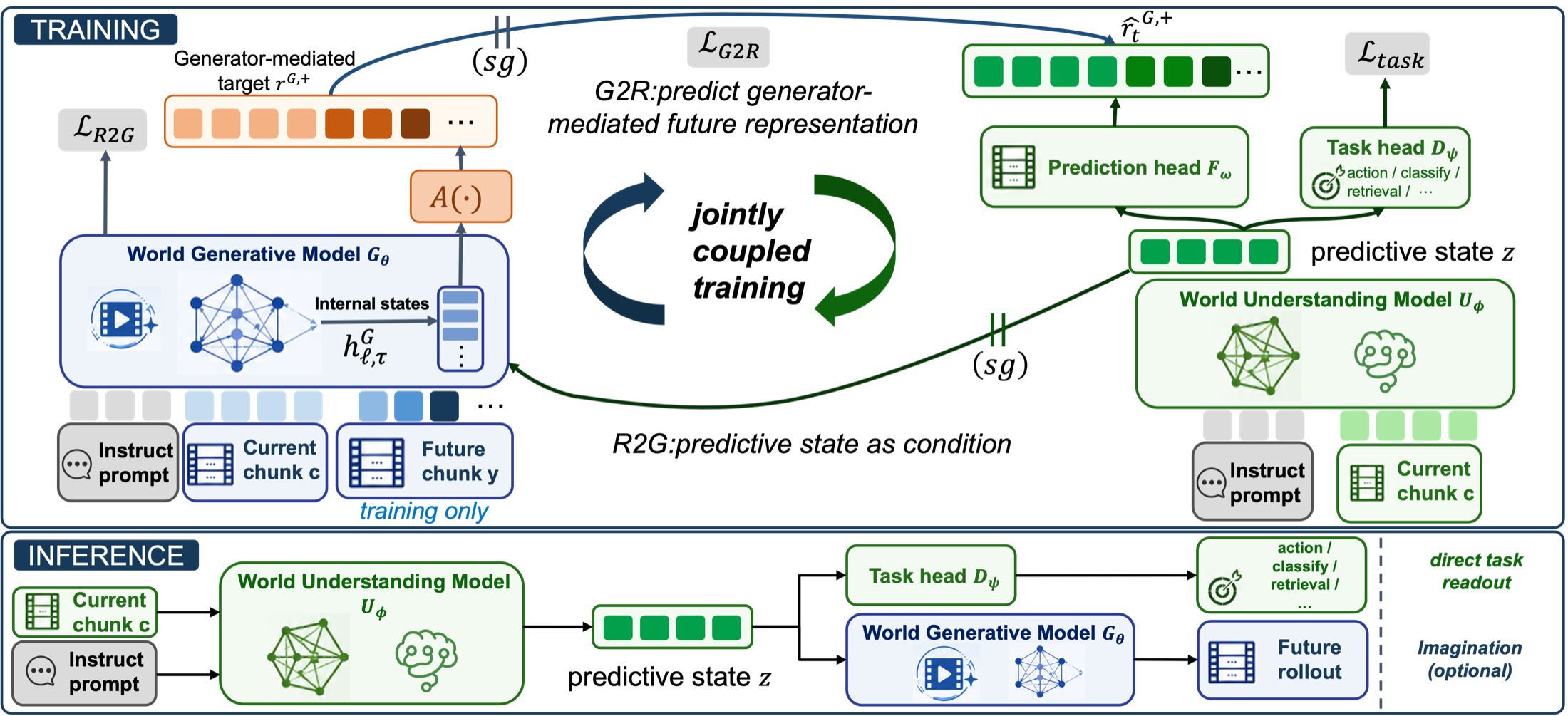
Core insight
Enfold changes the role of a world generator—from an action-time simulator into a training-time source of structured predictive supervision.
A teacher-forced generator processes the realized future and reveals multi-level hidden states across depth and corruption.
An encoder sees only the current visual context and instruction, and predicts the generator's future-conditioned computation.
Detached task heads read actions directly, while the same representation can condition an optional future rollout.
In one sentenceThe generator's future is not repeatedly rendered at deployment; its predictable internal structure has already been enfolded into the present.
Why generator states?
Pixels preserve every detail. Actions only indirectly describe scene evolution. Generator states expose how appearance, layout, and interaction are organized into a coherent trajectory.
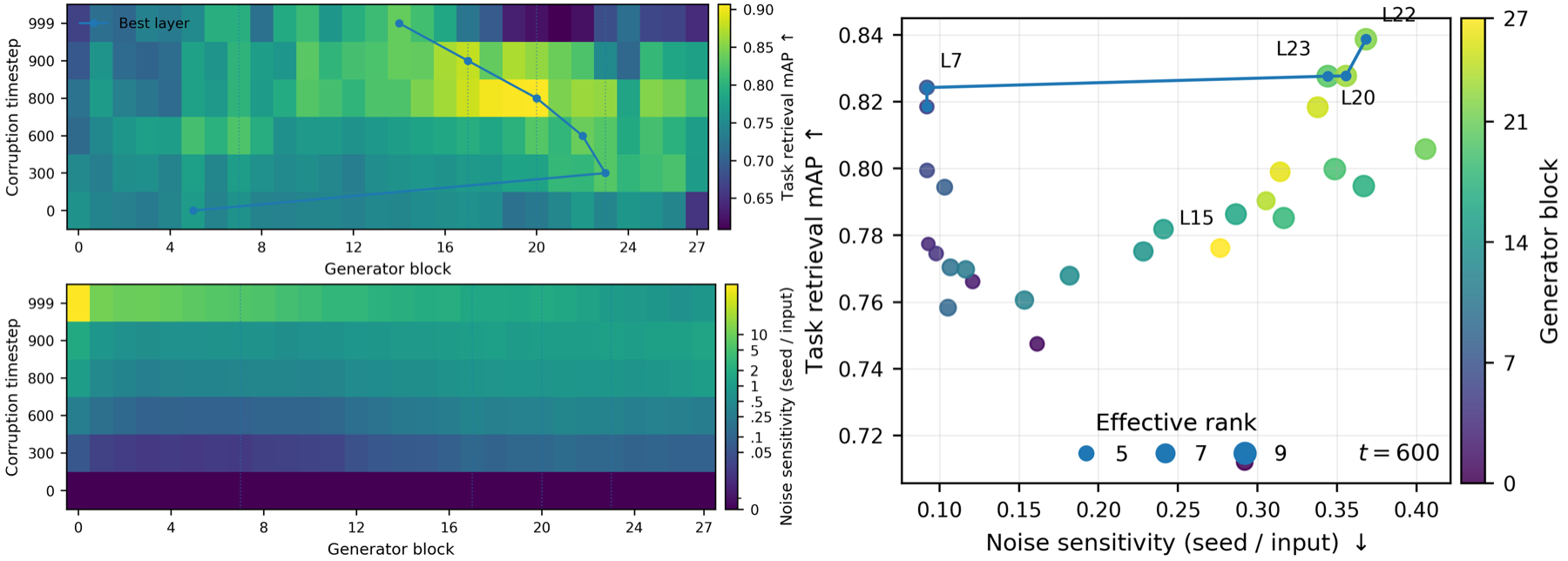
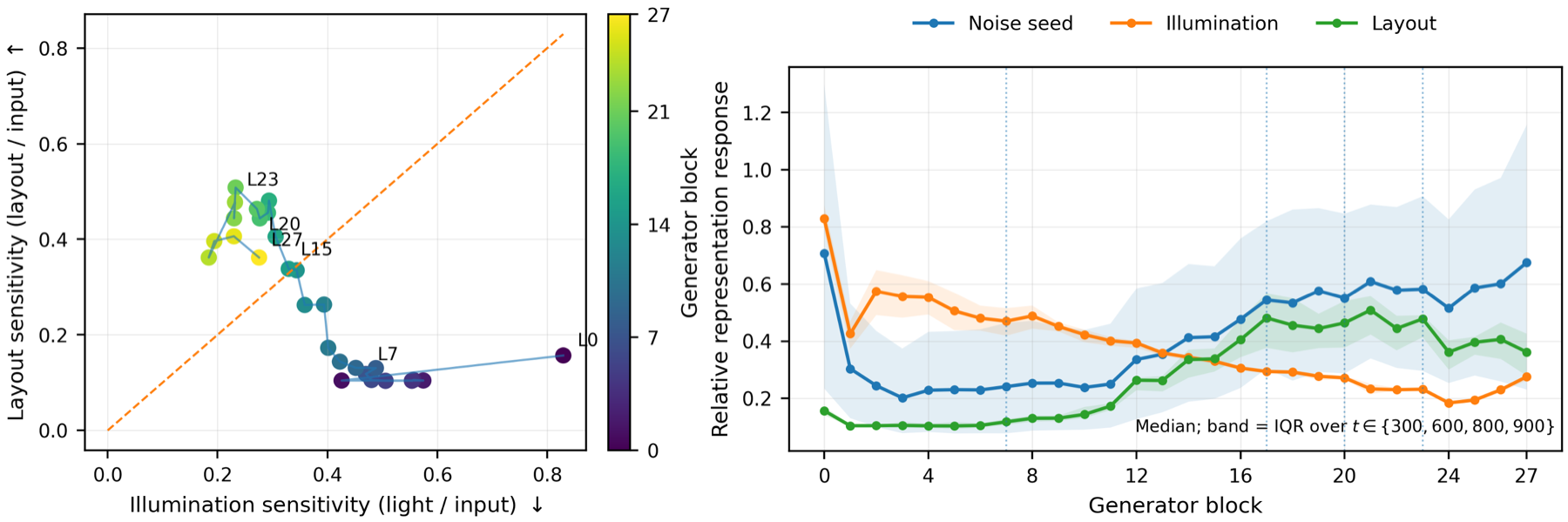
Enfold combines complementary generator depths and uses a timestep-conditioned head to express their shared structure at each corruption level.
Control results
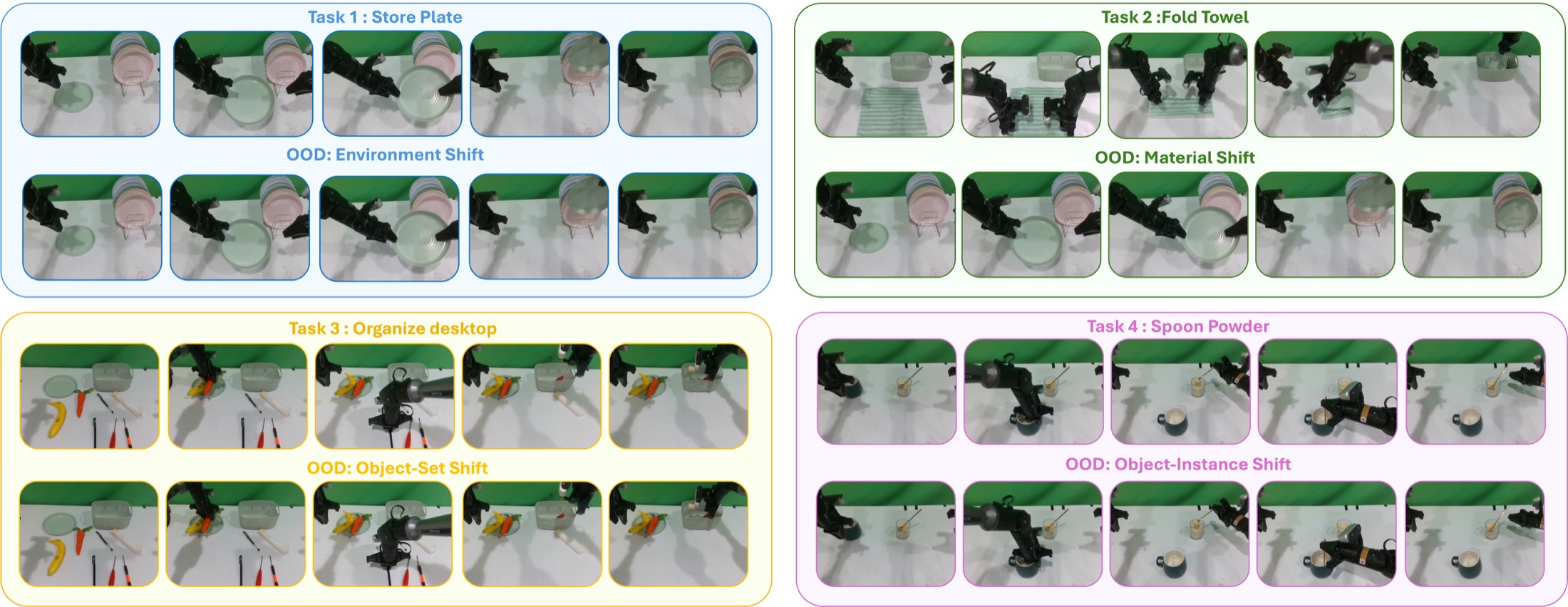
Enfold is evaluated on single-arm simulation, dual-arm simulation, and four real-world bimanual tasks—without embodied pre-training.
Action latency · A100 40GB
Enfold-Flash is 10.1× faster than Fast-WAM while retaining 97.5% LIBERO success.
Video demonstrations
Each clip is a single autonomous rollout. The same policy is shown in its nominal setting, under an out-of-distribution shift, and after a human changes the scene during execution.
Bimanual object placement
Nominal setting
Appearance or object shift
Scene changed during execution
Bimanual deformable manipulation
Nominal setting
Appearance or object shift
Scene changed during execution
Multi-object rearrangement
Nominal setting
Appearance or object shift
Scene changed during execution
Granular-material transfer
Nominal setting
Appearance or object shift
Scene changed during execution
Videos are muted and loop automatically; playback controls remain available for inspection.
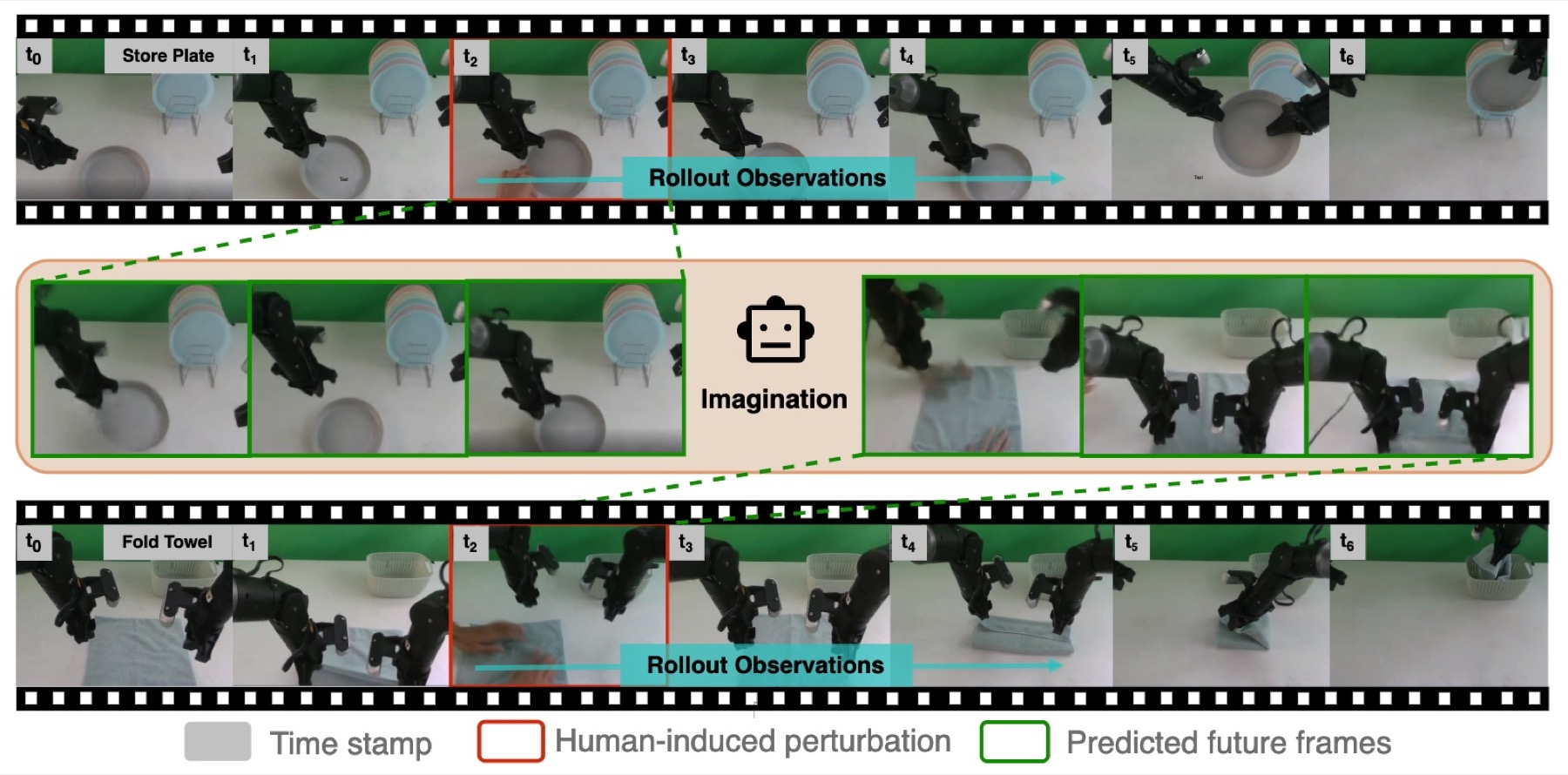
Reimagining after intervention
A human alters the scene while the instruction and preceding interaction remain fixed. Enfold re-encodes the new present and revises both its imagined continuation and executed action.
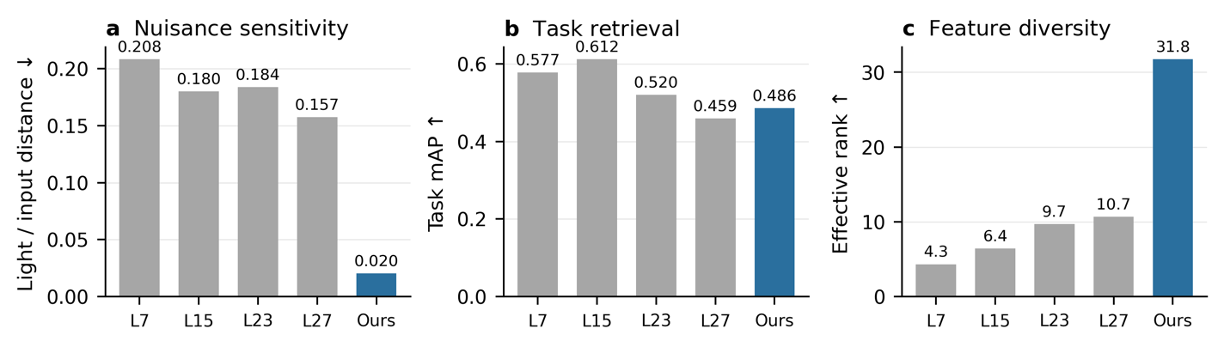
What Enfold encodes
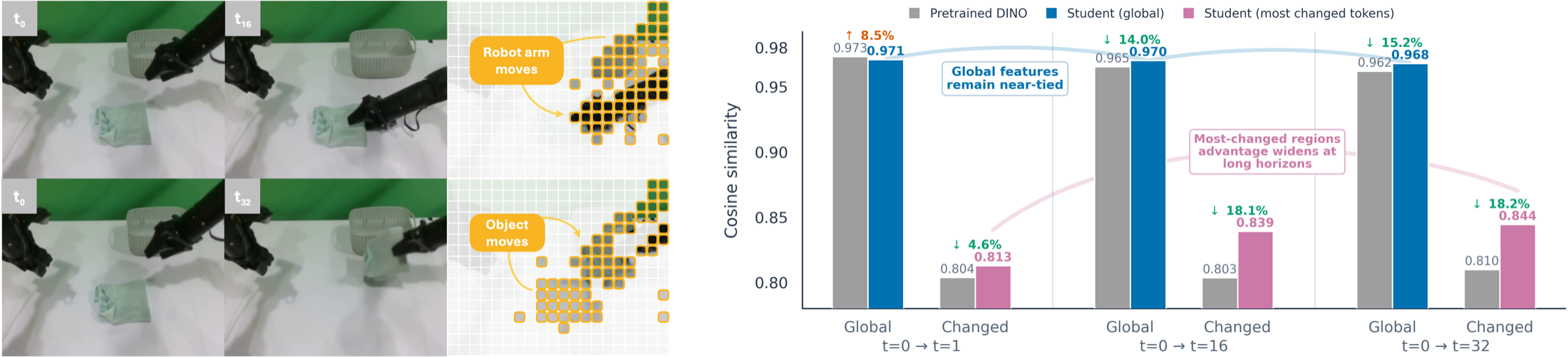
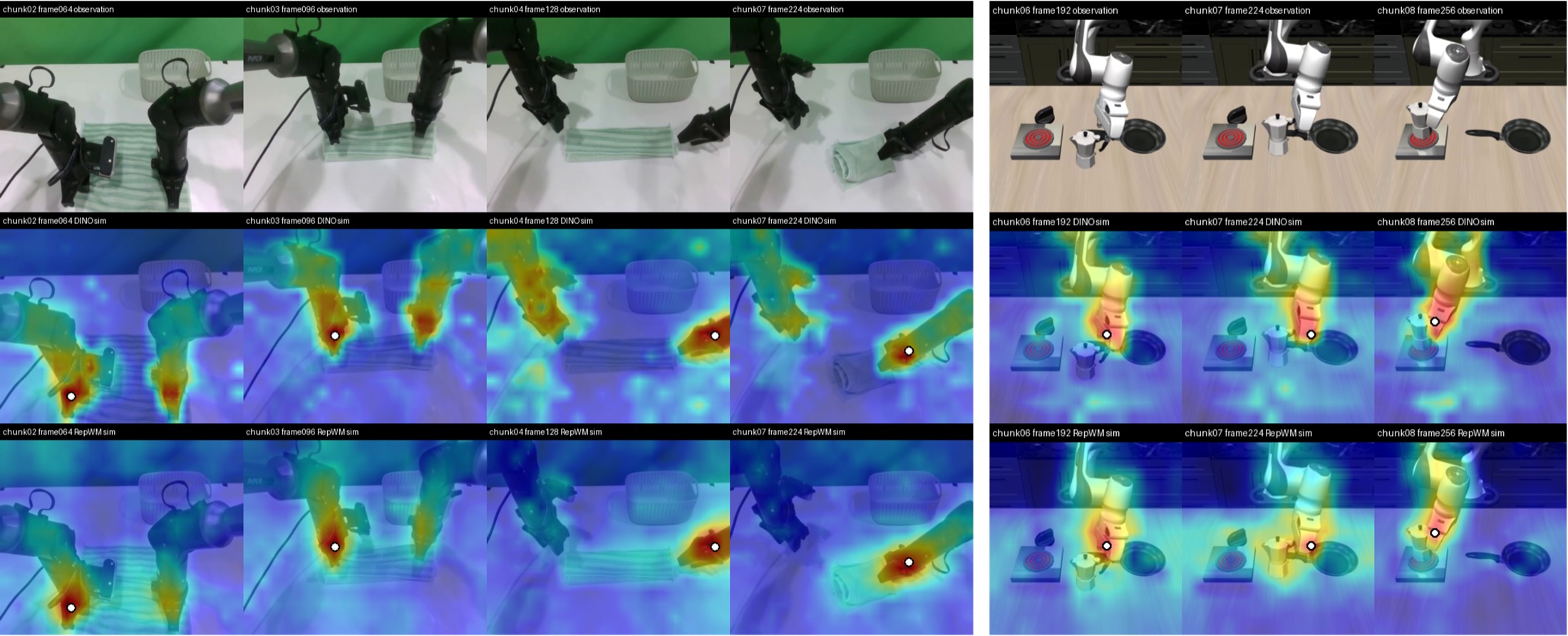
Predicting stochastic, future-conditioned states from the present acts as a conditional filter: nuisance variation is suppressed while interaction-relevant structure is retained.
Resources
Read the paper on arXiv, explore the project repository, or watch the real-robot rollouts above.